
The National Memorial for Peace and Justice

Alan Ricks
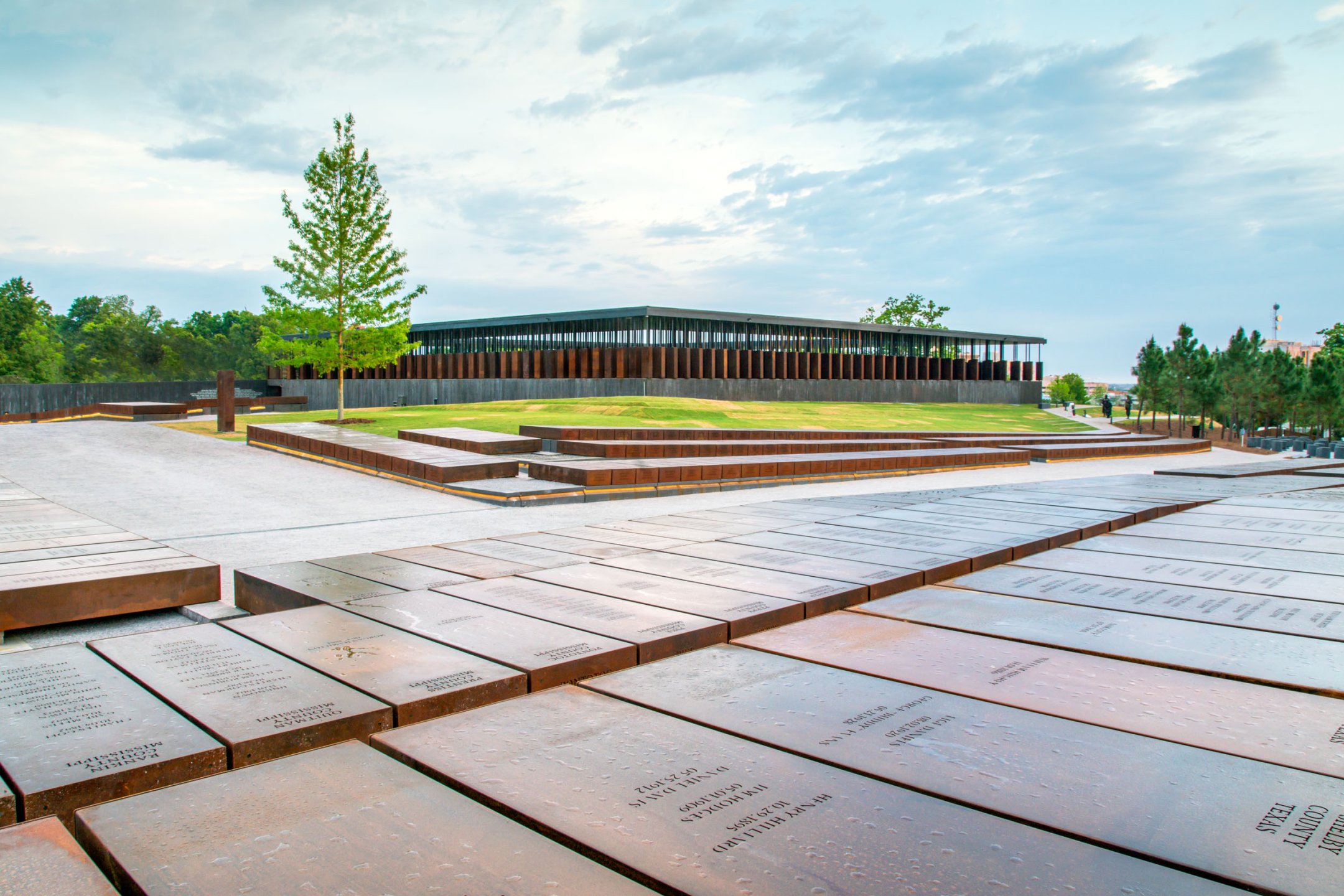
The National Memorial for Peace and Justice is the nation's first memorial dedicated to the victims of racial terror lynching, giving form to a history that has long been silenced.
The memorial was conceived by Bryan Stevenson and the Equal Justice Initiative (EJI) in Montgomery, Alabama, and grew out of EJI's landmark historical research.

Iwan Baan
In one of the most comprehensive investigations to date, EJI documented more than 4,000 racial terror lynchings of Black Americans in twelve Southern states between Reconstruction and World War II.
That research, and the conviction that the nation cannot heal from what it refuses to confront, is the foundation of the memorial. MASS worked with EJI to help realize their vision.

National Memorial for Peace and Justice, AL

Alan Ricks
The United States has done very little to recognize the lasting societal trauma perpetuated by the history of slavery and its aftermath. Decades of racial terror, lynching, and segregation created an environment of extreme fear in which racial subordination was brutally enforced.
The memorial confronts this history directly in a city that commemorates the Confederacy through dozens of monuments while offering comparatively few markers of the Civil Rights Movement.

The power of the memorial is rooted in this historical truth-telling, carried through narrative, art, and space. At its center, 810 suspended Corten steel monuments, one for each US county where racial terror lynchings took place, are engraved with the names of victims documented by EJI's research.
As visitors move through the memorial, the ground descends and the monuments rise overhead, an experience that asks visitors to reckon with the scale and weight of this history. Sculpture and artwork throughout the six-acre site, including works by Kwame Akoto-Bamfo, Dana King, and Hank Willis Thomas, deepen the narrative arc from enslavement through racial terror to the ongoing struggle for justice.

Alan Ricks

Alan Ricks

Alan Karchmer

Iwan Baan

Iwan Baan
The memorial is part of EJI's Legacy Sites, which also include the Legacy Museum and the Freedom Monument Sculpture Park, which together create space for truth-telling, hope, healing, and reconciliation.

Alan Karchmer


