
Kigali Genocide Memorial Archives
The African Center for Peace at the Kigali Genocide Memorial was a proposal to expand the original memorial for the 1994 genocide against the Tutsi.
Developed in partnership with Aegis and John McAslan & Partners, the expansion included spaces for reflection, education, and mourning.
In the aftermath of the genocide, Rwanda faced the challenge of fostering unity and reconciliation while ensuring justice. The scale of the tragedy overwhelmed existing legal systems, prompting the establishment of Gacaca courts. Inspired by traditional justice practices, these courts aimed to promote both justice and reconciliation by allowing people to bear witness.


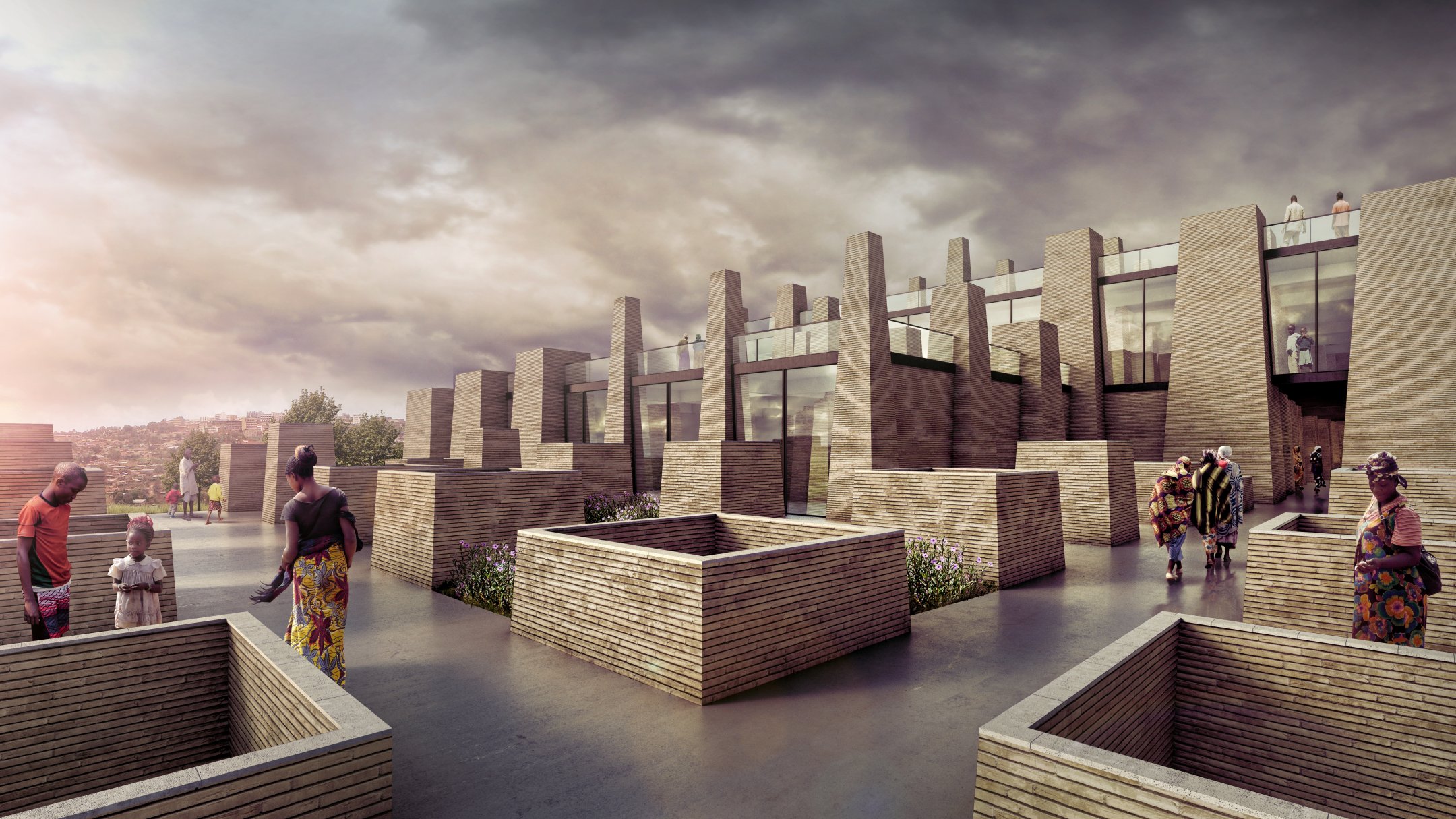
MASS proposed a testimonial space—a series of intimate, light-filled rooms shaped like pillars—where individuals could come to record their personal accounts. Additional spaces for reflection, education, exhibition, and learning were incorporated within and around the pillars. These spaces not only aimed to preserve history but also to encourage visitors to share their own stories and heal together as a nation. The design also featured a gallery, memory bank, and library to collectively capture, preserve, and share the memories of the past.
After dark, the pillars would transform into beacons of light, symbolizing hope for a brighter future.


