
Wajamama Birth Village

The Wajamama Birth Village aims to transform childbirth in Zanzibar by extending a midwifery model of care that is safe, dignified, and empowering.
Like many health systems in low- and middle-income countries, Zanzibar’s maternal care infrastructure remains overstretched and under-resourced. Health facilities are limited, and many women experience childbirth in crowded, understaffed, and undignified conditions. For those with financial means, care is often sought abroad. For others, poor experiences and outcomes lead to avoidance of care, compounding cycles of trauma, postpartum depression, and disempowerment.


Wajamama was founded to improve the wellbeing of communities in Zanzibar by making holistic health care services accessible to women and girls of all socioeconomic backgrounds. Since opening in 2019, Wajamama has served over 2,000 women through its outpatient clinic and fitness programs, and reached more than 5,000 others through training and community outreach. The current health center, while setting a new standard for outpatient care in Zanzibar, is not equipped for childbirth. The Wajamama Birth Village is the next step—expanding the model to include comprehensive maternity care.

Reception

Birthing Room

Located on 6,000m² of oceanfront land in Kizimkazi—a quiet fishing village on Zanzibar’s southwestern coast—the Birth Village will be one hour from both the Wajamama Health Center in Zanzibar Town and the international airport. The project includes a public birth center, a destination birth retreat, and a training center. It will also strengthen the neighboring Kizimkazi Health Center, a government-run facility that will serve as a partner outpatient site for local residents.
- The birth center will provide subsidized care to women with low-risk pregnancies from across Zanzibar. The facility will include birth suites and semi-private Kangaroo Mother Care rooms. While natural childbirth will be promoted through the midwifery model, a small operating room will be provided for emergency c-sections, as well as level 2 NICU services for stabilizing and transitioning babies. Care will be provided by a multidisciplinary team including midwives, obstetricians, nurses, an on-call anesthesiologist, and NICU staff.
- Adjacent to the birth center, a cluster of beachfront villas will support family-centered birth experiences in a private, home-like setting. Designed for families from East Africa and abroad, the villas offer 2–3 week stays where expectant mothers can prepare, give birth with midwife and doula support, and recover with access to services such as lactation counseling and home-cooked meals.
- A training center—planned for a second phase—will host clinical retreats, skill-building workshops, and fellowship programs to grow the next generation of providers committed to respectful, trauma-informed maternal care. Training will emphasize early complication recognition, hands-on clinical practice, and compassionate communication.

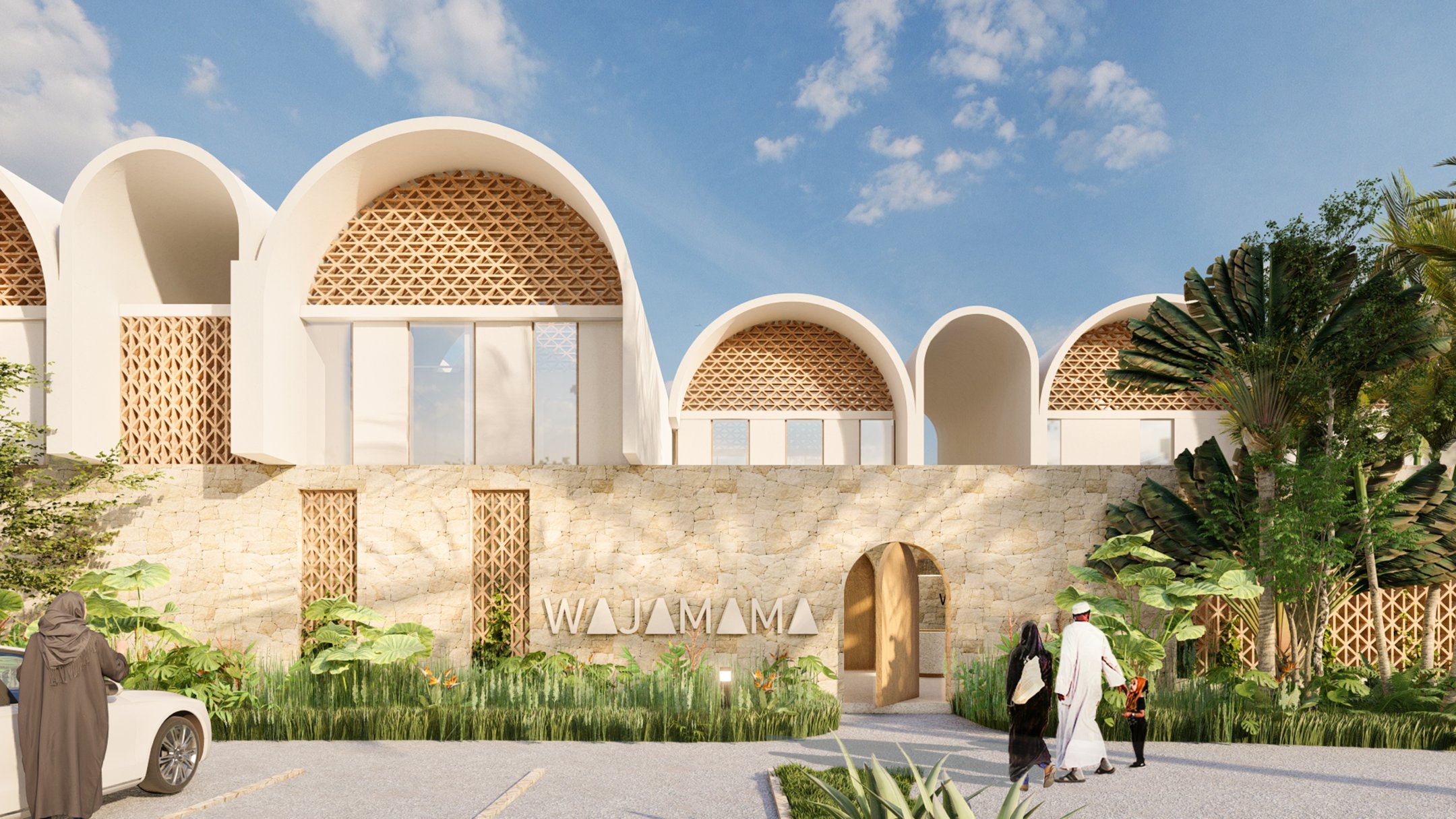
MASS designed the campus around the values of safety, privacy, community, and cultural rootedness. The architecture draws inspiration from Swahili design traditions—spaces organized through thresholds, courtyards, and framed views. Thick masonry walls offer natural insulation; perforated screens and shaded verandas encourage airflow and privacy; and regionally sourced materials, such as local stone, timber, and terrazzo, are used throughout.

Arches—extruded into vaulted forms—anchor the buildings and symbolize passage and renewal. As a motif, the arch holds spiritual and cultural meaning, referencing Islamic architecture and signifying transitions into new life phases. Structurally, the vaults provide a resilient, efficient roofing solution in a seismically active region.
The main birth center building features a reception area and outpatient clinic positioned near the street, integrating space for group antenatal care and surrounding a shaded courtyard for waiting. Birthing rooms are located toward the rear of the building, oriented along a private labor walking courtyard with views of the ocean. Each birth suite includes a large bed, equipment such as stall bars and birth slings to support a range of labor preferences and positions, space for a birth tub, and a private outdoor patio with a privacy screen.

The villas are staggered along the slope toward the beach to maximize privacy, breezes, and views, and each includes a family living room, kitchen, master suite with birthing tub, guest bedrooms, and garden.
The surrounding landscape will be cultivated to support healing and biodiversity. A permaculture approach will guide planting of native species and restoration of the site’s ecological health. Walkways and shaded gardens will create spaces for walking during labor, rest, and connection to nature.
The Wajamama Birth Village offers a new model for childbirth in Zanzibar—one that recognizes birth as a profound life transition, rooted in culture, supported by community, and centered on the dignity and empowerment of women.


