
Jacaranda Maternity Hospitals

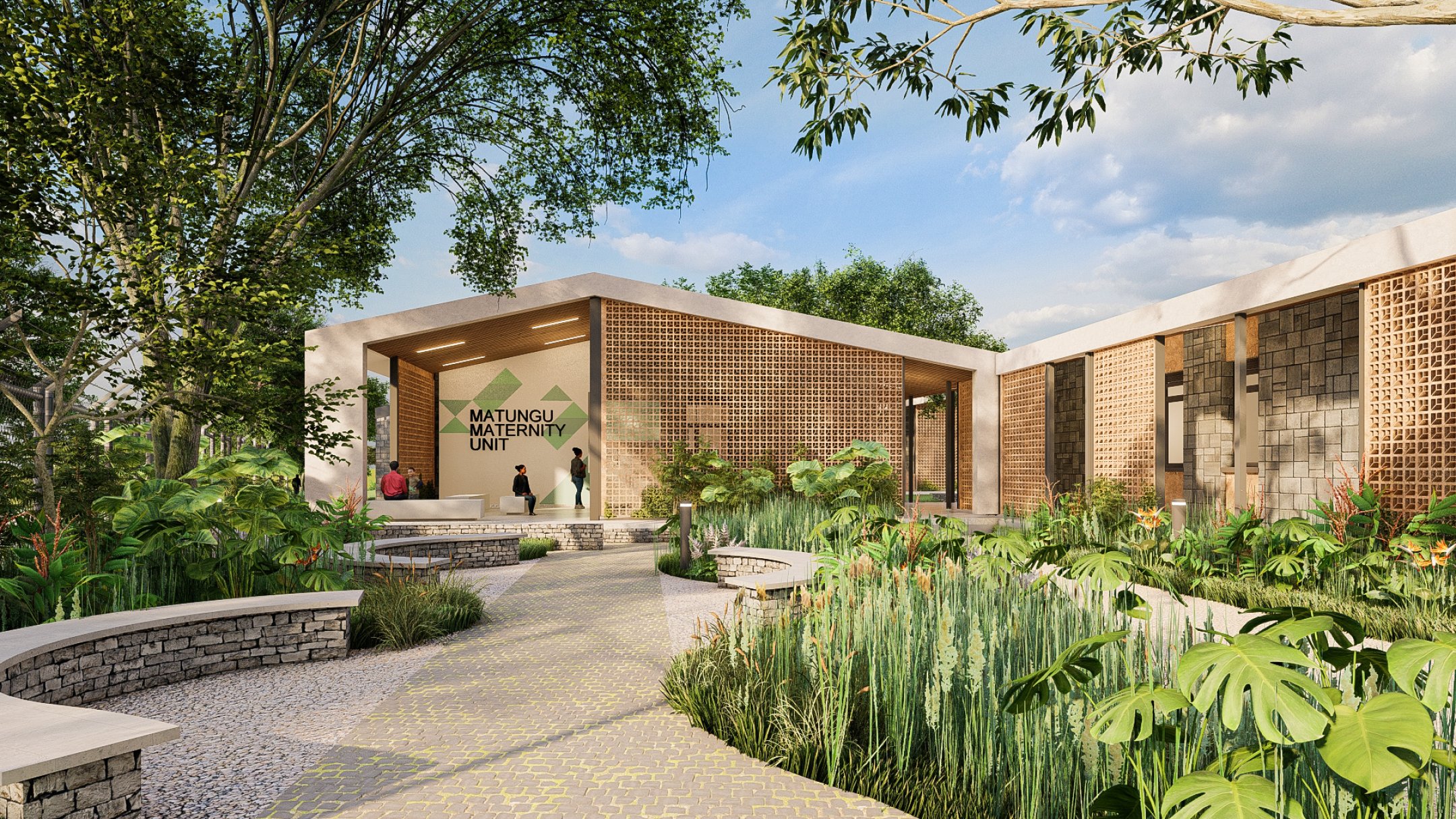
Jacaranda Health and MASS are building three maternal and neonatal units in Kakamega County, Kenya, as part of a broader effort to strengthen maternal health infrastructure and provide safe, dignified, and culturally responsive care.
Kenya faces a significant maternal health crisis, with over 7,700 women dying each year from pregnancy-related complications. Inadequate infrastructure, shortages of trained staff, and limited access to quality care remain major barriers—particularly in rural counties like Kakamega. Across the country, just over half of all health facilities have access to basic sanitation, limiting not only the safety but also the dignity of care. These conditions often discourage women from seeking facility-based care, perpetuating cycles of risk and loss.


Jacaranda Health’s Service Delivery Redesign (SDR) initiative addresses these challenges by improving both the quality and accessibility of health infrastructure. By focusing on the physical environment—where and how care is delivered—the goal is to build trust in the health system and ensure that every mother and newborn receives the care they deserve.
MASS joined this effort to lead the design of maternal and neonatal units at three hospitals in Kakamega County. The team developed a modular, flexible design system that can adapt to different sites and community needs—offering a scalable model for strengthening public health infrastructure across Kenya and beyond. Where possible, the design integrates and upgrades existing buildings; where new construction is required, layouts emphasize efficient flow, enhanced privacy, and ease of use for both patients and providers.

Each facility is organized around core values of safety, privacy, dignity, and cultural relevance. Mid-sized wards support intimacy and community among mothers, while ensuring adequate provider oversight and clinical support. Integrated spaces for birth companions recognize the essential role of family and support networks in the care journey. Each unit is organized around a labor walking garden—an outdoor space where women can move freely during labor in a protected and calming environment. Courtyards and shared gathering spaces create a welcoming, communal environment that reflects Kakamega’s closely-knit communities. The facilities are designed not only to support clinical care but also to reflect and respect the rituals, relationships, and experiences that shape birth and healing in this context.


The design process was grounded in human-centered research and inclusive engagement.
In 2023, Jacaranda and MASS conducted site assessments of existing health facilities, evaluating infrastructure conditions and identifying opportunities for improvement. Using the Delivering More Toolkit, the team conducted semi-structured interviews, workshops, and observational studies with mothers, family members, healthcare providers, and county health officials to understand their experiences and expectations for care. Local cultural practices, the importance of family involvement, and communal values directly informed the spatial and programmatic layout—from shared kitchens and prayer spaces to quiet resting areas and outdoor gathering spaces. The feedback also guided decisions about clinical workflows, equipment placement, and companion accommodations.


Following deep collaboration with the Kakamega County Health Management Team and other stakeholders, final construction drawings were completed in 2024 for improvements at Likuyani, Navakholo, and Matungu Sub-County Hospitals, along with upgrades to the newborn unit at Malava Sub-County Hospital. MASS also supported storytelling and film production to document user experiences and illustrate the impact of better designed care environments.
Construction is now underway, with completion expected in early 2026. The project offers a replicable model for advancing maternal health through user-centered design, local engagement, and resilient infrastructure—demonstrating how thoughtfully designed health systems can rebuild trust, improve outcomes, and bring dignified care within reach for all.


