
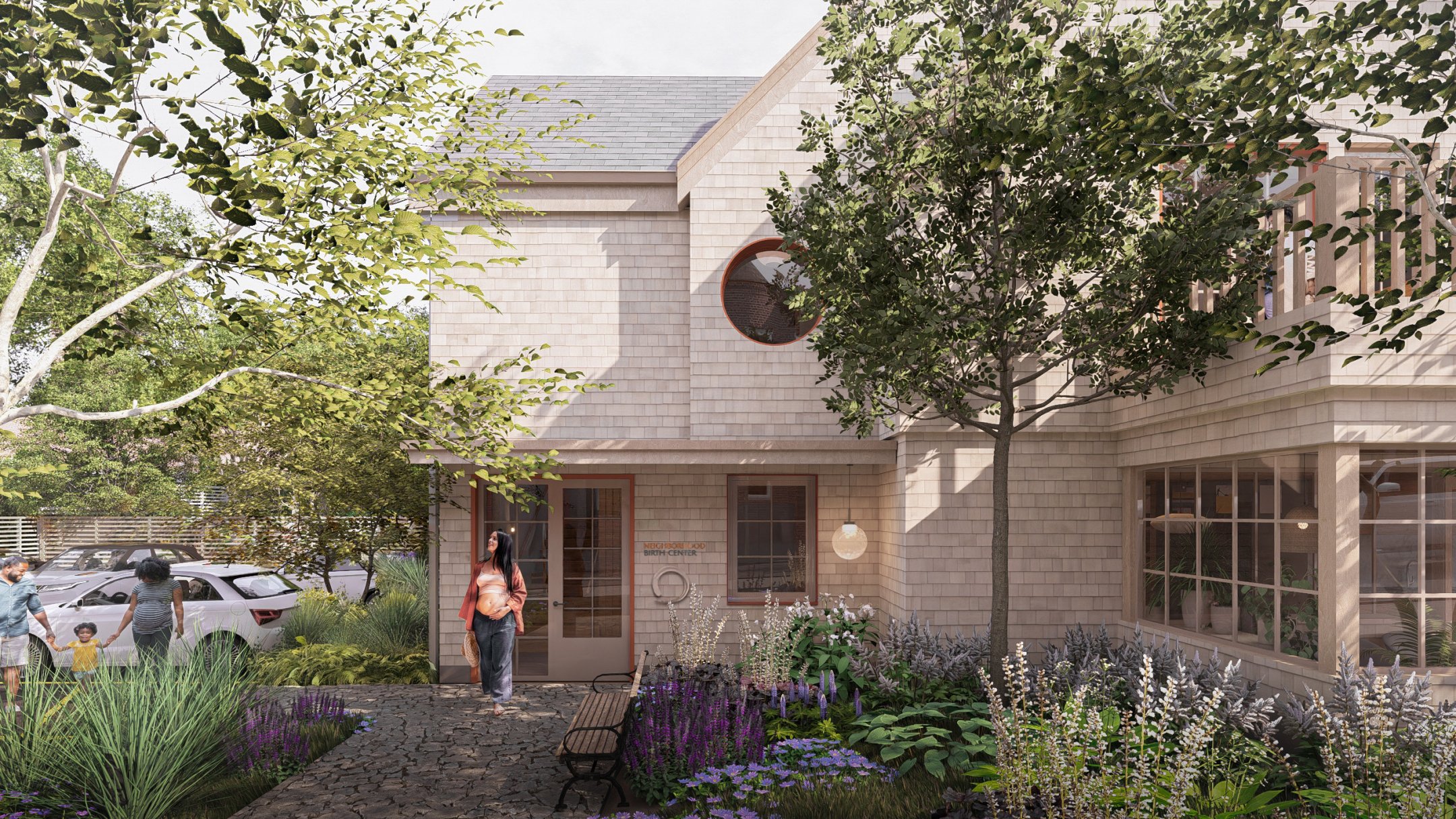
Neighborhood Birth Center
The Neighborhood Birth Center will be the first freestanding birth center in Boston, advancing reproductive and racial justice through community-based, culturally grounded midwifery care.
Boston faces substantial inequities in maternal health outcomes, particularly for Black and Brown birthing people, who are disproportionately impacted by systemic racism in healthcare. Despite its history of grassroots activism, the city lacks dedicated infrastructure that centers reproductive justice and dignified, community-based birth experiences. The Neighborhood Birth Center (NBC) aims to counter these challenges by offering a dignified, safe alternative to traditional hospital births. Designed in collaboration with MASS, NBC will provide comprehensive, culturally grounded midwifery care throughout pregnancy, labor, birth, and the postpartum period in a supportive, neighborhood environment.


The vision for the Neighborhood Birth Center is beautifully captured by Nashira Baril in her TEDx talk:
“When I close my eyes, and think about this sanctuary here in Roxbury, I feel sunlight streaming in from French doors that open from each birth suite to a labor garden… I hear people birthing in whatever position is supportive to them - on all fours on a queen sized bed, in the walk-in shower with multiple heads, or in the bubbling tub. I hear Haitian aunties heating up soup in a beautiful kitchen for that first postpartum meal. And circles of future fathers, kicking it in Spanish, sharing their worries and receiving assurance from seasoned dads… I see a young boy bearing witness to his mother’s power, and simultaneously learning about the care and history of midwives... I see our queer Black neighbor, first time parent, encircled by their chosen family, skin to skin with their new baby. I see elder neighbors and high school passersby passing the “birth lantern” lit at the end of the driveway – a small flickering light, turned on by the new parent, signaling to the community that a new baby is earthside.”

The design process was deeply grounded in community engagement and research. The team toured existing birth centers and consulted with midwives to understand how spatial layout—from building-wide circulation to the configuration of individual rooms—can support streamlined, respectful care. Workshops with birthing people and community members prioritized user-led design, exploring how the space could reflect and celebrate culture, support safe and healing birth experiences, and be welcoming across generations. Multiple neighborhood engagement events in Roxbury created broader opportunities for community participation. In parallel, the team conducted research on healthier building materials in birth environments. MASS developed a framework for evaluating material health and compiled resources to inform more rigorous standards for birth centers and healthcare settings more broadly.


The development of the Neighborhood Birth Center comes at a pivotal time for midwifery care in Massachusetts. Beyond its design, NBC is also tackling structural barriers to healthcare and advocating for broader policy reform. In response to formal testimony submitted by MASS and NBC, the Massachusetts Department of Public Health approved new facility design regulations in 2025—overhauling outdated rules that had made it difficult for birth centers to open or operate. These revised regulations better reflect the realities of midwifery-led care and remove barriers to expanding birth center access across the state.
Once complete, NBC will be the second birth center in Massachusetts, and the first of its kind in Boston. This expansion of community birth infrastructure is crucial for improving outcomes and experiences for all birthing people, especially birthing people of color, and will advance racial equity in birth and other health measures. At a time when many existing birth centers and reproductive justice organizations across the country face closures, displacement, and underfunding, the Neighborhood Birth Center stands as a beacon of what is possible: a permanent, community-rooted space where birth is honored, justice is pursued, and future generations are welcomed into a world of care and possibility.


