
Louise B. Miller Pathways and Gardens

The Louise B. Miller Pathways and Gardens honors the story of Louise B. Miller and the 24 Black Deaf students she fought to protect—marking a critical moment in the broader arc of the American Civil Rights movement.
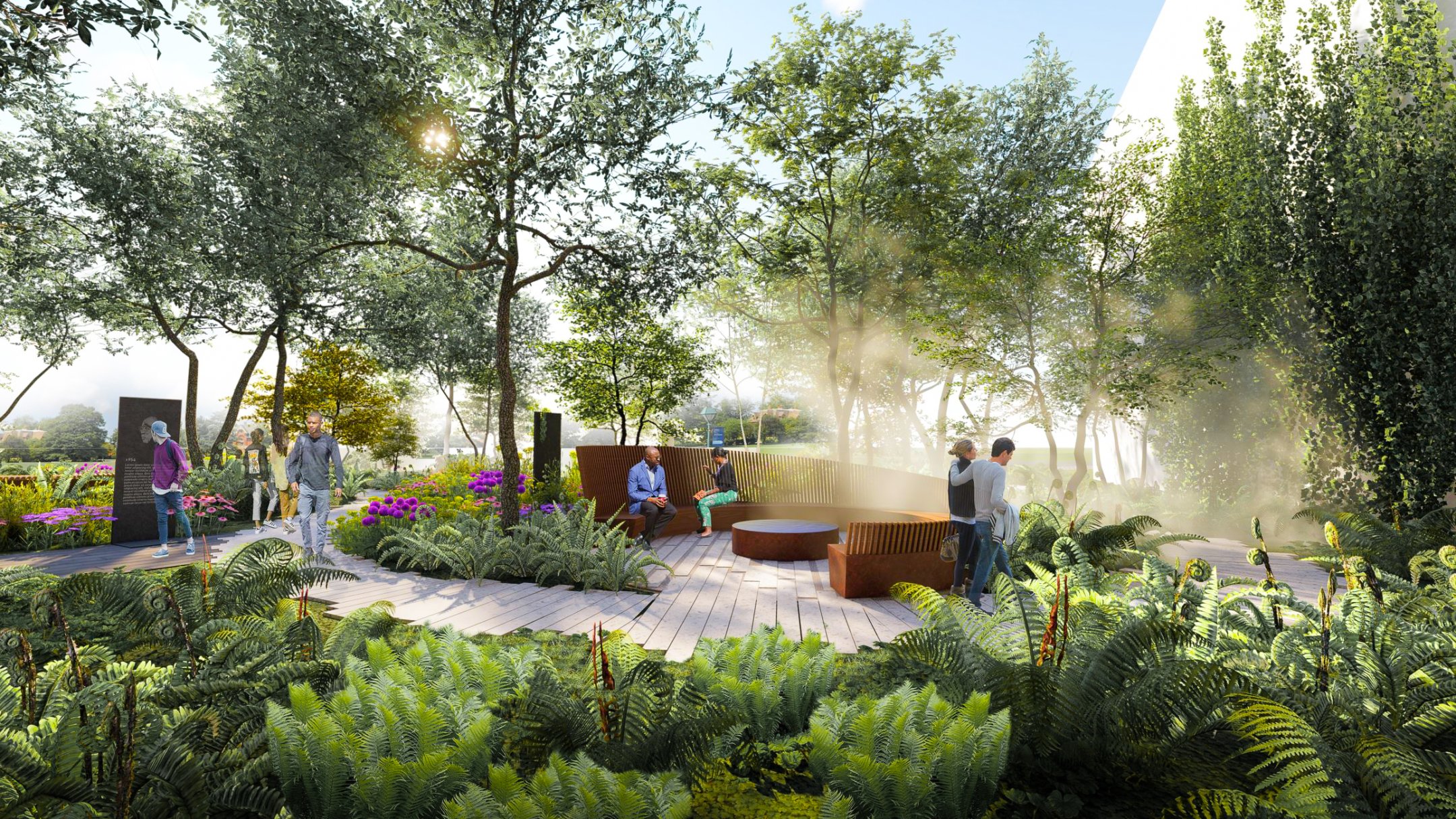
Located on the site of the former Kendall School Division II for Negroes at Gallaudet University, the memorial transforms a place of segregation and exclusion into one of healing, reflection, and recognition. Designed by MASS in collaboration with TEN x TEN, this 27,000 square-foot cultural landscape includes the Freedom Garden, interpretive pathways, and sculptures by Dana King and Branly Cadet.


King’s statues honor Miller and the 24 students who attended the segregated school from 1952–1954. Cadet’s sculptures—rendered in Black American Sign Language (BASL)—celebrate the expressive power and cultural specificity of the Black Deaf community. The site also features markers identifying 20 historically segregated Deaf schools across the U.S.
The memorial’s design was shaped through a community-led process led by three Black Deaf co-developers in partnership with the Center of Black Deaf Studies, the Miller family, and Gallaudet University. Together, they created a sensory-rich, identity-affirming space that invites dialogue and deepens public understanding.


The memorial also acknowledges Louise B. Miller’s 1952 Supreme Court victory, Miller v. Board of Education, which secured the right for 24 Black Deaf students to receive public education in D.C.—years before Brown v. Board. Though groundbreaking, the students remained segregated in a separate building, a story long overlooked even within Deaf history.

For years, this story remained buried. In 2018, calls from Gallaudet students and alumni—many from the Black Deaf community—sparked a movement to honor the Miller family’s legacy. The resulting memorial is part of a broader effort by Gallaudet to reckon with its own racial history while contributing to a national conversation about the ongoing impacts of segregation and systemic exclusion. It challenges narrow, able-bodied interpretations of Deaf history, emphasizing that deafness is not a monolith, but a diverse and intersectional experience shaped by race, culture, and resistance.
Slated to begin construction in 2026, the Louise B. Miller Pathways and Gardens is more than a tribute—it is a national model for how design can uncover suppressed histories, foster belonging, and support truth-telling as a form of repair.

