
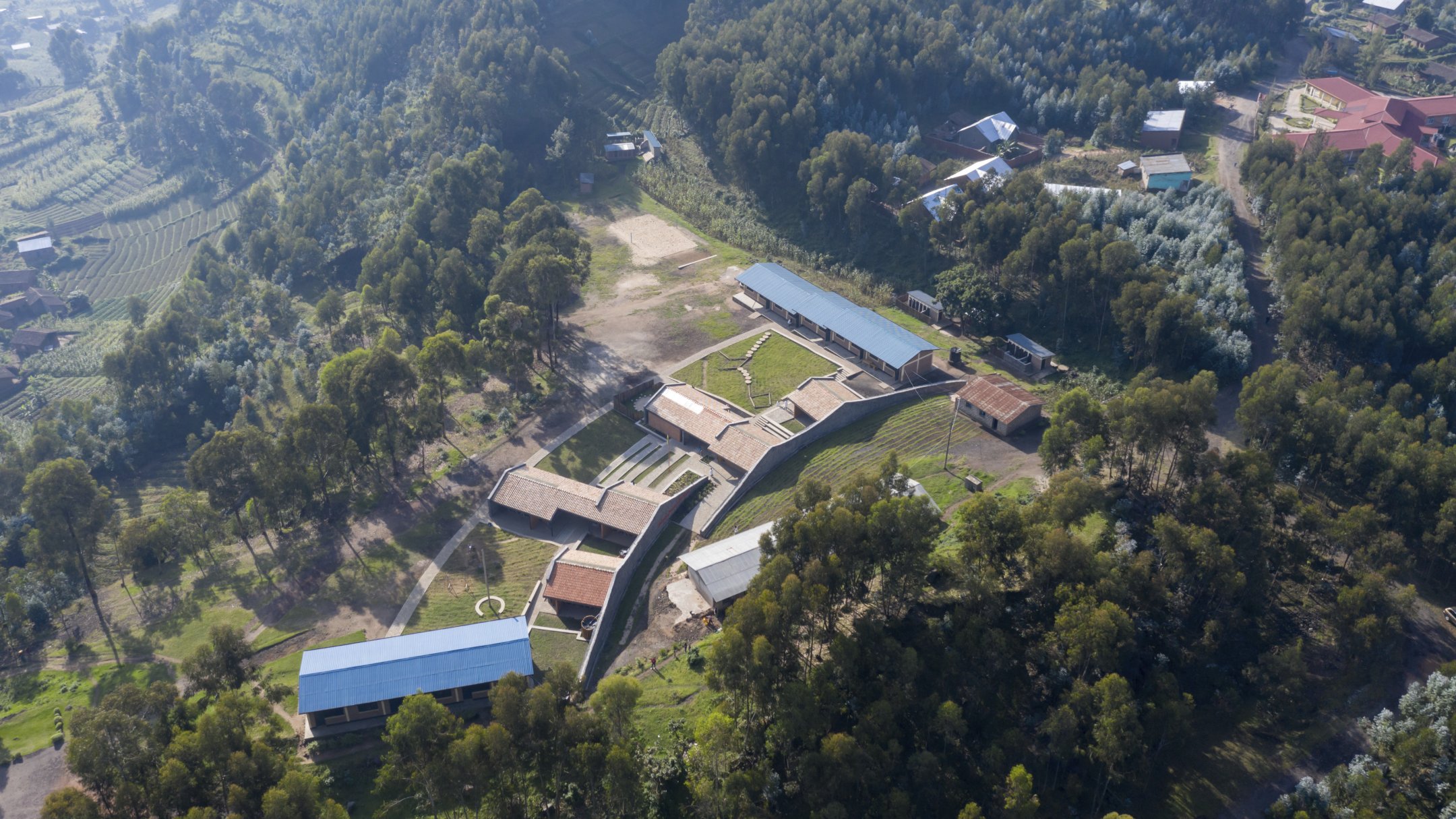
Ruhehe Primary School
The Ruhehe Primary School offers a scalable model for improving learning environments and national school infrastructure in Rwanda.
Serving over 1,100 students from pre-primary through grade six, the school is supported by 20 teachers and staff in Rwanda’s Musanze District. As the flagship project of the inaugural African Design Centre (ADC) fellowship, Ruhehe was reimagined through a partnership with the M² Foundation and the District of Musanze. This work built on strategies first piloted at Mubuga Primary School in 2015, advancing a broader vision for educational infrastructure across the country.


Alan Ricks

MASS
Learn more about the African Design Centre
The ADC Fellowship is aimed at training the next generation of African architects and designers through an intensive curriculum that combines classroom instruction with hands-on learning. Fellows study local craft traditions, research pressing issues facing the continent, and develop leadership and design skills before embarking on a design-build project. Under faculty guidance, fellows move through every stage—community engagement, design, construction, and impact evaluation—working side-by-side with local residents, hiring and sourcing locally, and ensuring the project strengthens community capacity.

ADC fellows: Jeremiah Oonyu, Lydia Kanakulya, Maame Prempeh, Mtamu Kililo, Yemi Kacoutie, Victor Iyakaremye, Tshepo Mokholo, Thandizo Kachiza, Mawa Moses, Zani Gichuki MASS

Ruhehe exemplifies this immersive pedagogy. Beyond physical upgrades, the redesign demonstrates how campus-wide interventions can improve academic outcomes, raise satisfaction among students and teachers, and boost retention. The campus is organized like a necklace, with classrooms as pendants along a central path and a perimeter wall that buffers noise and ensures safety. During construction, two original classrooms were demolished and replaced with five new ones, along with a library and a headmaster’s office, while the remaining classrooms were renovated to meet improved standards.


Environmental upgrades—including natural ventilation, diffused daylight, and acoustic control—created healthier learning environments. Locally available materials and regionally appropriate construction methods reinforced affordability and replicability. Situated beside a busy sector office, the school benefits from close community ties while managing the interface between civic and educational spaces.
Ruhehe marks the culmination of the ADC fellowship and the first full implementation of the Mubuga design model. Together, these projects establish a precedent for community-driven, replicable school infrastructure in Rwanda—proving that thoughtful, contextual design can transform national education systems while training the next generation of African design leaders.


