
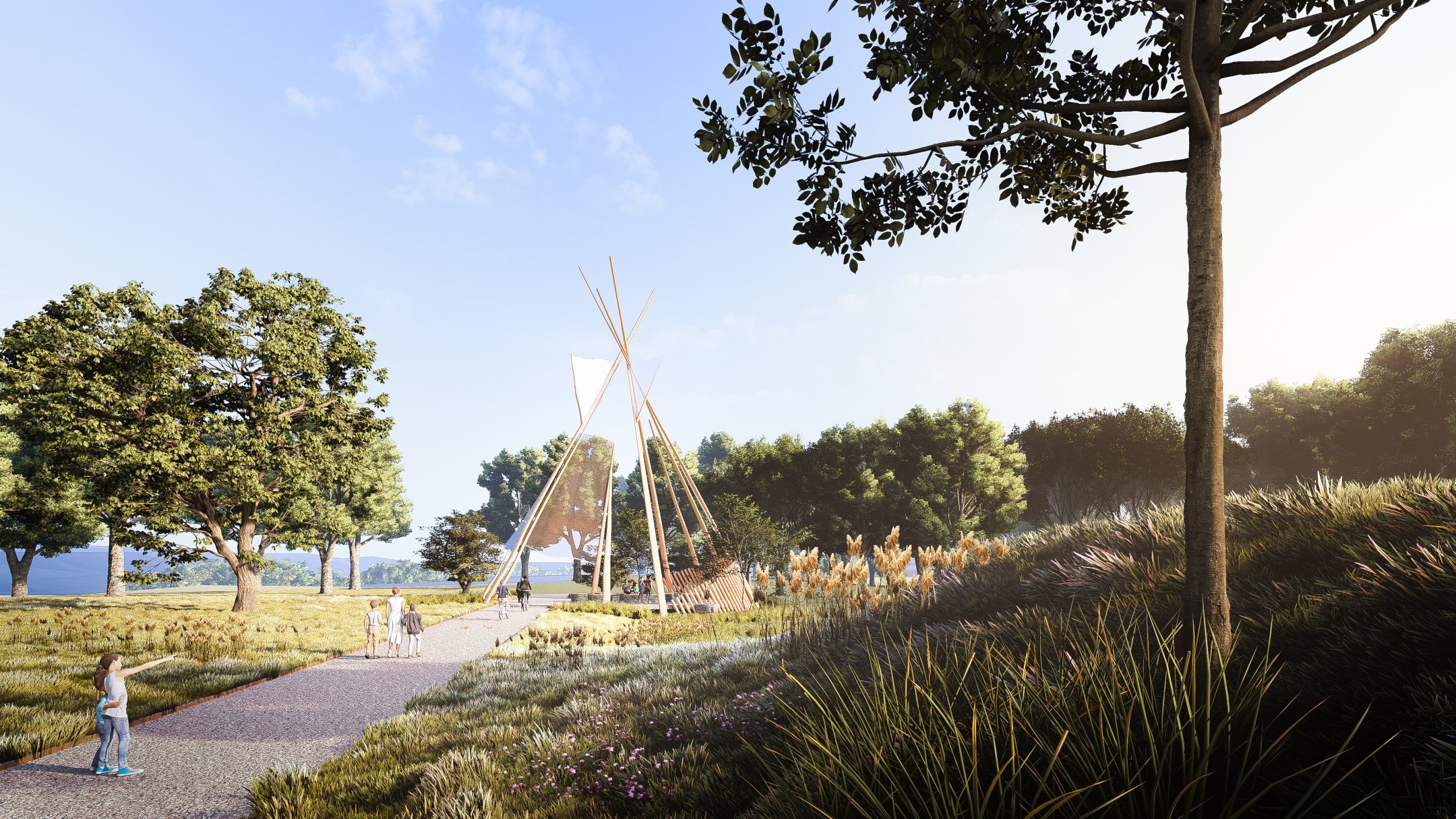
Northern Cheyenne Healing Trail

The Northern Cheyenne Healing Trail is a commemorative landscape of gathering, ceremony, and remembrance along the historic route of the Fort Robinson Breakout and Massacre.
In 1878, after being imprisoned in Indian Territory, tribal leaders Dull Knife and Little Wolf led 300 Northern Cheyenne people back to their Montana homeland. U.S. troops pursued the group, killing 64 individuals and violently detaining 70 more. A modest monument now marks the Breakout site, on grassland that Northern Cheyenne tribal members hope to reclaim, reshape, and activate through collective memory and cultural healing.


This five-mile stretch—from Fort Robinson in Nebraska, a site commemorating frontier military history, to the massacre site—offers an opportunity to retell this history through an Indigenous lens. It is also a sacred space for healing, where Northern Cheyenne youth run 400 miles each winter from Fort Robinson to their reservation in southeastern Montana, honoring their ancestors' path.
In partnership with Chief Dull Knife College, Tribal elders, and cultural bearers, MASS is supporting the creation of a healing trail that embodies the concept of ceremonial journey—a practice of healing through movement, memory, and sacred space.

Designed in close collaboration with community members and Tribal leaders, the trail integrates Cheyenne values of respect, knowledge, wisdom, and spirituality. It includes seven nodes of reflection and gathering, including the Morning Star Garden, People’s Reflection Point, Children’s Reflection Point, Chief’s Reflection Point, and the existing Breakout Monument. These spaces are shaped by a shared design vocabulary grounded in:
-
Four Directions: Each node reflects one of the cardinal directions, aligning cultural meaning with geospatial orientation.
-
Symbols of Home: Forms such as the sweat lodge, Morning Star flag, and Cheyenne tipi are reinterpreted to reflect purpose and place.
-
Cues of Land: Materials such as stone, wood, soil, water, and grass evoke the landscape as a living witness and teacher—bearing the scars of violence, and offering the possibility of renewal.


Interpretive signage throughout the trail shares the history of the breakout and the lives lost, creating an environment for education, remembrance, and cross-generational learning. As a living memorial, the trail honors the sacrifices of ancestors while fostering healing and understanding for future generations—ensuring that Cheyenne stories, sovereignty, and values continue to guide the path forward.
The trail is shaped by participatory events, land art, and architecture, developed through an Indigenous-led process that centered cultural protocols, traditional knowledge, and ancestral energy. MASS’s role was to listen, support, and translate these frameworks into an architecturally resonant proposal.

Throughout the design process, the team navigated a series of purposeful contrasts: ceremony and recreation, ancient and modern, Indian and cavalry, green field and fort, death and life. The resulting trail offers a powerful experience of resilience, storytelling, and cultural continuity—a sacred journey toward truth, recognition, and healing.


