
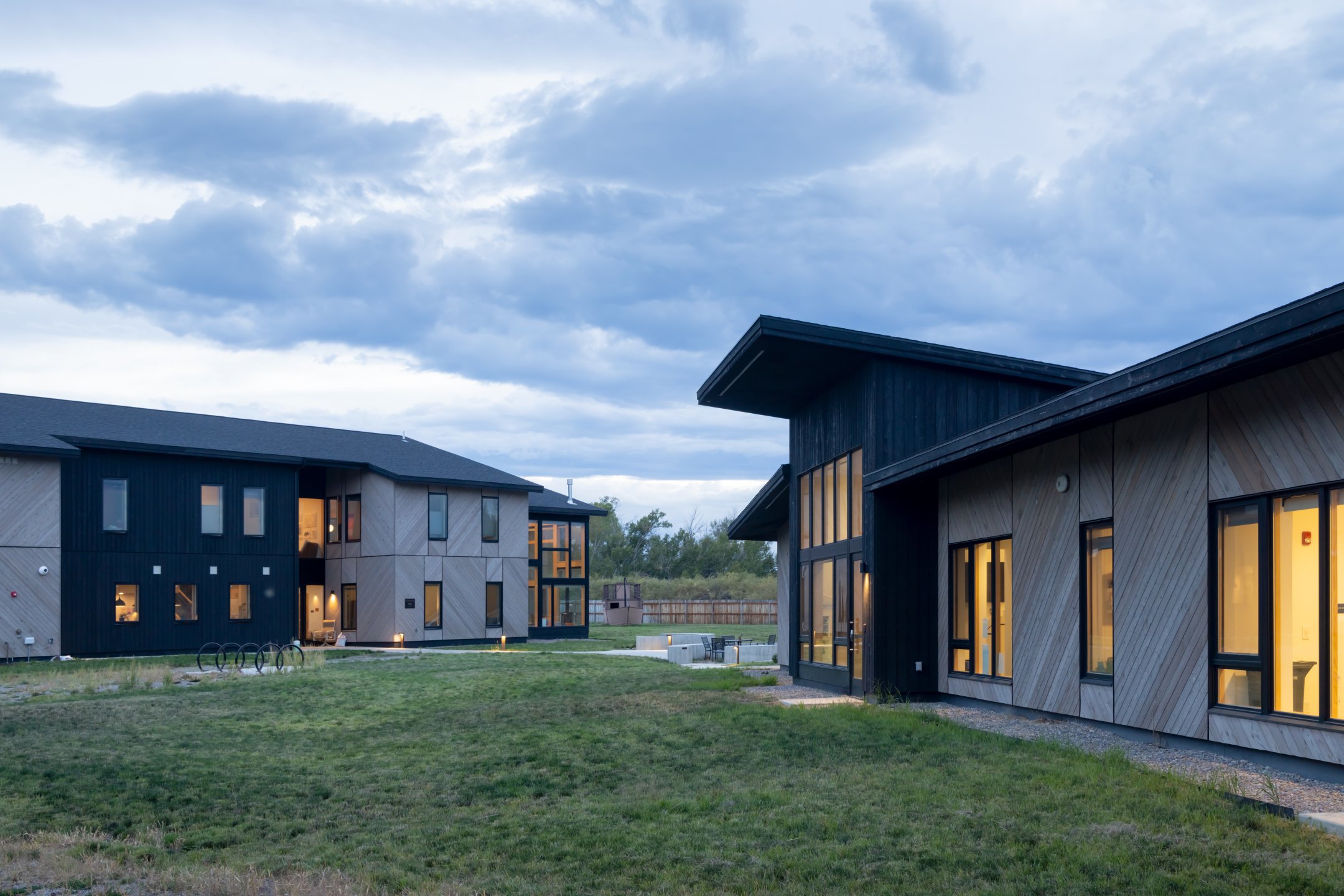
Haven Domestic Violence Shelter

Leveraging healing-centered design, the Haven Domestic Violence Shelter is a beacon of safety, dignity, and community connection for women and families impacted by domestic violence.
Since 1979, Haven has supported survivors in Bozeman, Montana and the surrounding area. In the first few decades after Haven’s founding, domestic violence was often considered a private issue—one rarely discussed openly—leaving many survivors to face their trauma privately or risk the stigma of being seen as a “victim.” Haven has worked to change that narrative through care, education, advocacy, and prevention.


MASS

MASS

MASS

MASS


The facility is grounded in five principles of trauma-informed design: safety, trust, choice, collaboration, and empowerment.
The design also focuses on enabling Haven’s unique approach of embracing survivors as whole people by offering adaptable spaces that reflect their unique needs and improve access to wraparound services.
MASS worked with Haven’s staff to understand how spaces can support individuals healing from traumatic experiences and configured spatial solutions to make survivors feel safe, supported, and empowered. To balance security with connection, residential areas are tucked behind public spaces, creating a protected but open-feeling environment. Flexible residential spaces offer an “ecosystem of choice” with opportunities for positive distractors.


Sustainability was integral to the project. The facility is LEED certified, with minimized materials, low embodied carbon, and strategies to reduce operational energy use. Large operable windows, passive solar design, and shaded roof overhangs ensure year-round comfort while reducing energy demand.


The surrounding landscape offers walking paths, quiet seating areas, and space for play and healing. Shaped by native trees and grasses, the site filters runoff and returns water to the aquifer. Vegetable gardens, created in collaboration with the community, further connect residents to the land and to one another. Pet-friendly zones and outdoor gathering spaces reinforce a sense of belonging and joy.
As an urban infill project, the shelter enhances biodiversity while protecting a nearby watercourse—demonstrating that safety, healing, and ecological stewardship can coexist.


