
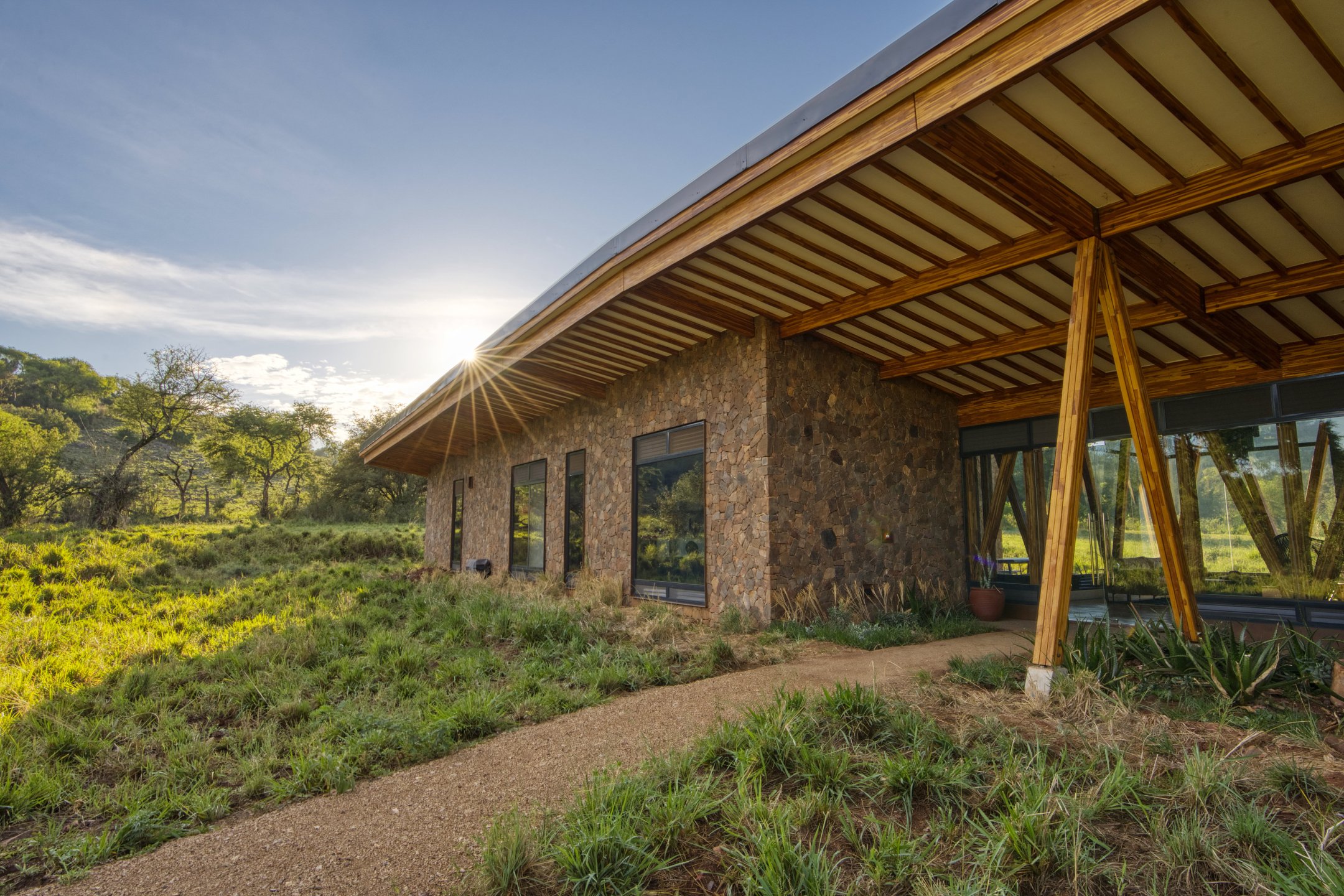
Western Serengeti Research Facility
The Research and Innovation for the Serengeti Ecosystem (RISE) is a purpose-built facility advancing conservation science in the heart of the Western Serengeti.
The collaborative research hub, which opened in July 2020, welcomes grant-funded researchers, protected-area managers, and government officials to develop and share conservation-based management strategies.
RISE supports and expands upon the Grumeti Fund’s existing work in ecological monitoring and wildlife management. Key research areas include human–wildlife interactions, invasive species control, and the reintroduction of endangered species. A central focus of the initiative is to foster the next generation of Tanzanian scientists, with a particular emphasis on supporting women in conservation science.

Osse Greca Sinare

Osse Greca Sinare

Osse Greca Sinare

Osse Greca Sinare


Apro Visuals
The facility offers a flexible program of workspaces, meeting rooms, and on-site laboratories, providing a shared base for collaboration and time-sensitive research. Conference and gallery spaces host conservation events and convenings, encouraging knowledge exchange and community engagement.
Designed with a light footprint and using locally sourced materials, RISE integrates naturally into the surrounding ecosystem. The building’s layout promotes informal collaboration, with sweeping views of the landscape and visibility into active research areas inspiring connection and action.

MASS

Ossa Greca Sinare

Apro Visuals

Solar exposure modeling
The facility operates entirely off-grid, powered by a dedicated photovoltaic array, and includes rainwater harvesting and wastewater treatment systems. Energy efficiency is further enhanced through optimized glazing, passive ventilation, and thermal mass strategies. A subterranean thermal labyrinth harnesses the Serengeti’s ideal diurnal temperature swing, delivering passive heating, cooling, and fresh air through floor-level grilles.
Throughout design and construction, minimizing ecological impact was a top priority. Local wildlife patterns, including nearby wildebeest migration routes, informed the site layout and building orientation. All landscaping materials were sourced within walking distance to further reduce environmental disturbance.


